

When the Voice Stops Believing Itself
The ordinary unreliable narrator lies and keeps moving. The worst version is the one who hears the lie forming and still has to finish the paragraph.

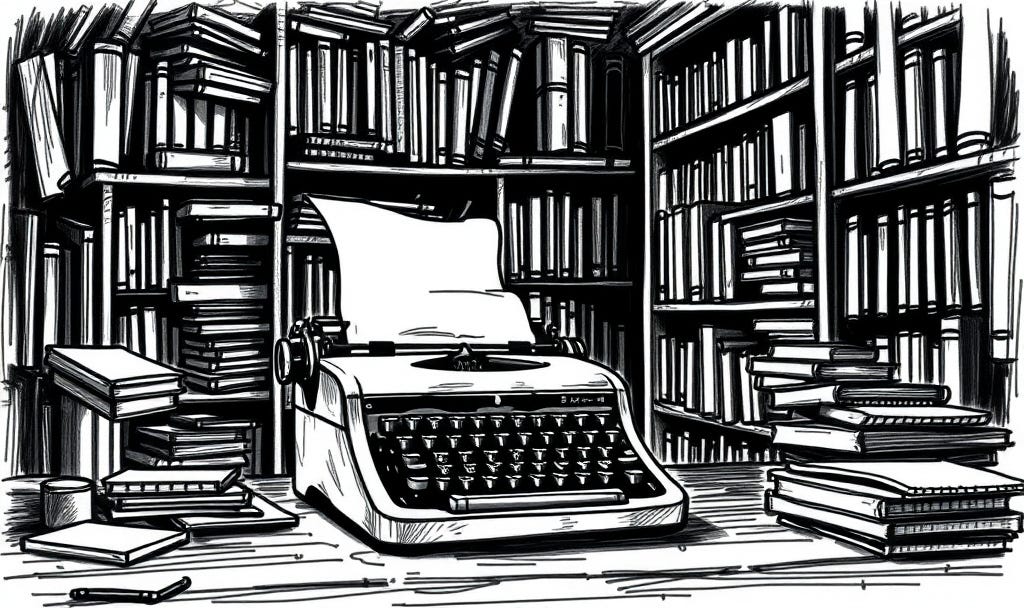
The First Betrayal
The contract between narrator and reader is primitive, but it works. A voice emerges from the dark, and you, perhaps against your better judgment, agree to follow it. You do not demand sainthood, or even honesty in the bureaucratic sense, because literature has always been built on the backs of charming frauds, unreliable historians of their own experience, and small, wounded monarchs who can stack their injuries into something that almost resembles a palace. What you need is not purity, but conviction, a voice that believes in its own scaffolding long enough for you to step inside without feeling the ground tilt beneath you.
Every story starts as a confidence game with nicer lighting.
This is why the ordinary unreliable narrator remains readable, even trustworthy in their own peculiar way. The voice may distort, may omit, may preen or justify or wrap itself in sentimental gauze, but it rarely pauses to question whether its own coherence is an illusion. It lies forward, always forward, mistaking the sheer force of its own insistence for truth, and that is usually enough to keep the machinery humming, to keep the story from collapsing under the weight of its own contradictions.
Confidence does not prove honesty. It only keeps the wheels from coming off in public.
The narrator who becomes unreliable with themselves is constructed on a more treacherous blueprint. The problem is not simply that the voice lies to you; the problem is that the voice hears the lie as it forms, recognizes the inflation of motive, the careful laundering of vanity into something that passes for sincerity, and yet cannot halt the sentence midstream. Language has inertia, and stopping halfway is its own kind of defeat, so the words keep coming, even as the voice knows it is building a structure on shifting sand.
The worst sentence is the one that understands exactly what it’s doing.
So the first betrayal is internal. A line appears, and before it has even cooled, the mind circles back to interrogate its own creation. Did you mean that, or did you just enjoy the cleverness of the phrasing? Is it true, or merely plausible in the way that flatters you, lets you remain at the center, complicated, wounded, and just a little bit above it all? By the time the paragraph closes, the original assertion has grown a shadow, then a counterargument, then a counterargument to the counterargument. The sentence is no longer a declaration; it is a courtroom, and every clause is on trial.
The Split Mind
You can feel the split as it happens, the fracture opening in real time. A declarative sentence lands with a certain swagger, and then another part of the mind, sharper, more skeptical, perhaps more honest, starts filing objections. Not always because the sentence is false, but sometimes because it is too smooth, too glib, or because it is only approximately true, which for some minds is the worst sin of all, since approximation feels like a kind of moral shortcut disguised as elegance.
Self-consciousness is the editor biting the hand that is still writing.
This is the point where the whole operation starts to look like an intellectual autoimmune disorder. The mind singles out one of its own claims as suspect and launches an attack, then turns on the attack for being disproportionately performative, then questions that attack for sounding a little too satisfied with its own severity. What once looked, from a safe distance, like a single voice now reveals itself as a crowded room of prosecutors, each certain they are the only grown-ups left in the building.
The sentence is no longer a statement. It is a crime scene with punctuation.
The traditional unreliable narrator enjoys the structural advantage of blindness. They remain insulated by their own conviction. They do not stop to ask whether they are lying, self-deluding, or editing memory into something survivable. They just narrate, and their ignorance keeps the edifice upright. The reader may notice the cracks, but the narrator does not, and that ignorance is not incidental. It is load-bearing.
Ignorance is often the steel beam in the house of authority.
The self-unreliable narrator loses that crucial beam. Now the voice sees too much watches motive slip into the sentence before meaning has even settled, catches self-preservation hiding in the choice of words, notices performance clinging to confession like a silhouette. The old authority is gone, but the obligation remains. The page still demands sentences. The voice must keep moving, even after discovering that the machinery of its own sincerity is a tangle of pulleys, mirrors, and a nervous stagehand mopping his brow behind the curtain.
Once you hear the machinery, pure speech is over.
Candor as Costume
The ugly twist is that self-doubt can become a credential. It can become a style. It can become the very charm the narrator uses to keep your trust. Look, the voice says, see how suspicious I am of myself, see how little I let myself get away with, see how ruthlessly I interrogate every impulse toward certainty. Surely this degree of self-implication proves honesty.
It does not. Not by itself.
Confession is still theater when the spotlight is flattering.
There is a version of collapse that has been to graduate school, that knows how to undress in public while keeping the expensive shoes on. The narrator seems to surrender authority, but in the act of surrender, quietly forges a new kind: the authority of visible fracture, the authority of curated self-doubt, the authority of saying ‘I don’t know’ with such deliberate force that the uncertainty itself begins to sound like expertise.
Even humility can learn to pose if the audience rewards it enough.
This is what makes the condition corrosive instead of merely difficult. The narrator does not just doubt the statement; the narrator doubts the doubt. Is this indecision genuine, or just another ornament? Is this self-correction a real act of rigor, or simply a more sophisticated form of self-display? Is this sentence reaching for truth, or only trying to look like it has been battered on the way there?
The ego loves uncertainty once it learns that uncertainty photographs well.
At this stage, narration becomes its own private hell. You cannot go back to naïve authority without feeling like a fraud, but you cannot linger forever in the spectacle of your own fracture without becoming a different kind of fraud. Irony offers one kind of anesthesia, sentimentality another. Both are ways of numbing the wound. The more difficult path is to keep speaking with the compromised voice, letting the cracks show without turning them into a commodity.
The Reader Contaminates Everything
And then there is the reader, that silent accomplice, contaminant, witness, or projected fantasy, depending on how charitable you are feeling. The narrator may pretend to be writing in private, but the moment the sentence is arranged for possible reception, an audience-shaped pressure enters the room. Somebody, even if the somebody is only a future version of you, is going to read this and decide what kind of person writes like this.
The audience shows up before the first comma dries.
Now the voice faces a new dilemma. It is not simply a question of whether the sentence is true, or whether the doubt attached to it is sincere, but whether the entire performance of uncertainty will be read as bravery, self-indulgence, incompetence, seduction, or some awkward hybrid of all four. The voice begins to hear itself from the outside, anticipating judgment, modifying its own texture, resenting the need to adjust even as it does so.
Nothing curdles a thought faster than imagining it being admired.
This is why the self-unreliable narrator becomes exhausting in a way the ordinary liar never does. The liar at least has the decency of momentum. The self-unreliable voice keeps revisiting the same polluted checkpoints, asking whether this phrase is overreaching, whether that image is too self-satisfied, whether the bluntness is authentic or merely another mask. The prose doubles back, not out of confusion, but because it can no longer trust its own clarity.
The voice is not lost. It is trapped in quality control.
And yet this ugliness may be the closest thing to honesty available once innocence is gone. Not because the collapse is beautiful, and it very much is not, but because the collapse refuses the old fraud by which fluency masquerades as moral legitimacy. A compromised voice describing compromise may still lie, but at least it has quit pretending the lie will arrive in a judge’s robe.
After the Voice Turns
What is left when the old authority has died and even self-doubt has begun to feel like a performance is not wisdom, not serenity, but a kind of procedural fatigue and a smaller, more stubborn integrity. You move sentence by sentence, no longer pretending that the next line will redeem the last. You document the contamination instead of hiding it, and you keep going because moving forward is the only option that does not immediately dissolve into grandiosity or stylized despair.
When authority dies, rhythm drags the body a little farther.
The voice does not become pure. It becomes harder to flatter. It admits that every line may already contain its own rebuttal, that fluency can counterfeit almost anything, and that confession can preen just as shamelessly as arrogance.
The clean voice was always a little fake. The broken one is just less coy about it.
This is not redemption. It is only the diminished, reluctant honesty that remains after innocence has been stripped away. A statement that knows it is already compromised and still chooses to exist on the page has not escaped the farce; it has only given up pretending the farce is certainty. In these conditions, that is as close to dignity as you get.
Your unreliable narrator experience?
Keep the fluorescent lights humming while the phrases interrogate themselves.
Love the illustration... just random web thing-y ?
https://youtu.be/-oyOHAew3Bc?si=SV8-X3KKBStFF4yw